Multiple teeth: implant-supported bridge
Replacing several missing teeth in a row with a bridge held by implants.
Medically reviewed by Dr. Broneil Ishaya, DDS (CA license #105491) · Oct 2026 · Written by the Turlock Dental Studio team
Quick answer: An implant-supported bridge replaces several missing teeth in a row using two or more implants as anchors instead of natural teeth. It stays fixed in place and is not removed for cleaning. It requires surgery and healing time, and whether it fits you depends on your bone, gums and bite.
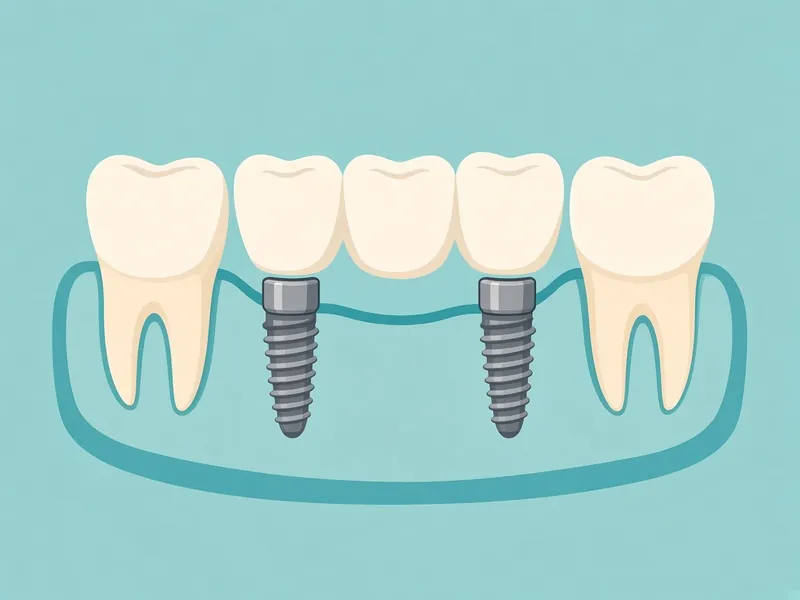
What is it and how does it work?
When several neighboring teeth are missing, a bridge can be anchored to two or more implants instead of to natural teeth, so a row of teeth can be replaced without an implant for every tooth.
How does it compare with other options?
- Traditional bridge: no surgery, but adjacent natural teeth are reshaped to hold it.
- Removable partial denture: no surgery, but it comes out and may feel less stable.
- Implant bridge: fixed in place and does not rely on natural teeth; requires surgery and healing time.
How much does it cost?
Your cost depends on your treatment plan. You get an itemized estimate after your exam, before any treatment.
No dental insurance? See current offers (see offer details, including usual fees) and financing options.
Key facts
- Replaces multiple adjacent missing teeth
- Supported by implants, not by reshaped natural teeth
- Fixed in place; cleaned with floss or special brushes
- Usually needs fewer implants than teeth replaced
- Requires surgery and several months of healing
Can one implant hold more than one tooth?
Often a bridge spans a gap using implants at each end, so you may not need one implant per tooth. Your exam and 3D scan determine how many implants are needed.
Whether this treatment is right for you can only be decided after an exam. Every case differs, and results vary.
Sources
Find out which option fits you, starting with a free consultation.
Book a free consultation